
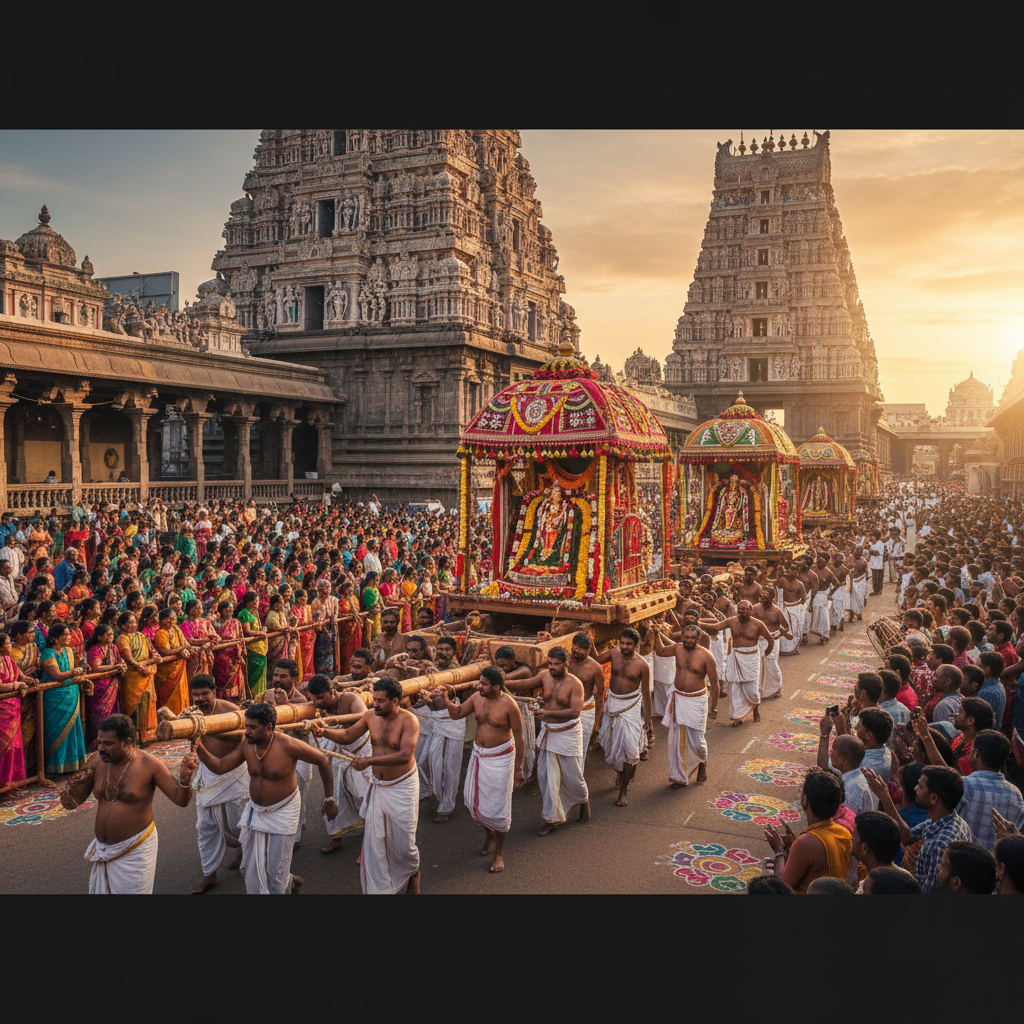
Brahmotsavam is a grand, nine-day annual Hindu festival, primarily celebrated at the Tirumala Venkateswara Temple (Tirupati) in Andhra Pradesh, honouring Lord Venkateswara (Balaji) and believed to have been started by Lord Brahma for the world’s welfare. Key events include ceremonial flag hoisting (Dwajarohanam), processions of deities on various vahanas (vehicles like Garuda, Hamsa), grand rituals like Chakrasnanam, and concluding with Dhwajavarohanam, attracting millions for spiritual blessings and prosperity.
Significance & Legend:
Brahma’s Festival: The name means “Brahma’s Festival,” as it’s believed Brahma initiated it to thank Lord Venkateswara for protecting humanity.
Most Auspicious: Considered the most important festival at Tirumala, ensuring prosperity.
Timing: Held annually in the Hindu month of Ashvina (September-October).
Key Rituals & Events:
Dwajarohanam: Hoisting the Garuda flag on the Dwajasthambham, marking the start.
Vahana Sevas: Daily processions with idols of the Lord and consorts on different divine vehicles (Pedda Sesha, Garuda, Hamsa, etc.).
Garuda Vahanam: A highlight where the Lord rides the giant Garuda, signifying divinity and Vedas, with immense crowds.
Rathotsavam (Chariot Festival): The deity is taken out in a large chariot; witnessing this is believed to prevent rebirth.
Chakrasnanam: A holy dip for the deities in the Swami Pushkarini lake on the final day.
Dhwajavarohanam: The ceremonial lowering of the flag, concluding the festivities.