Political Pulse

Political Pulse

Electoral Process Tensions

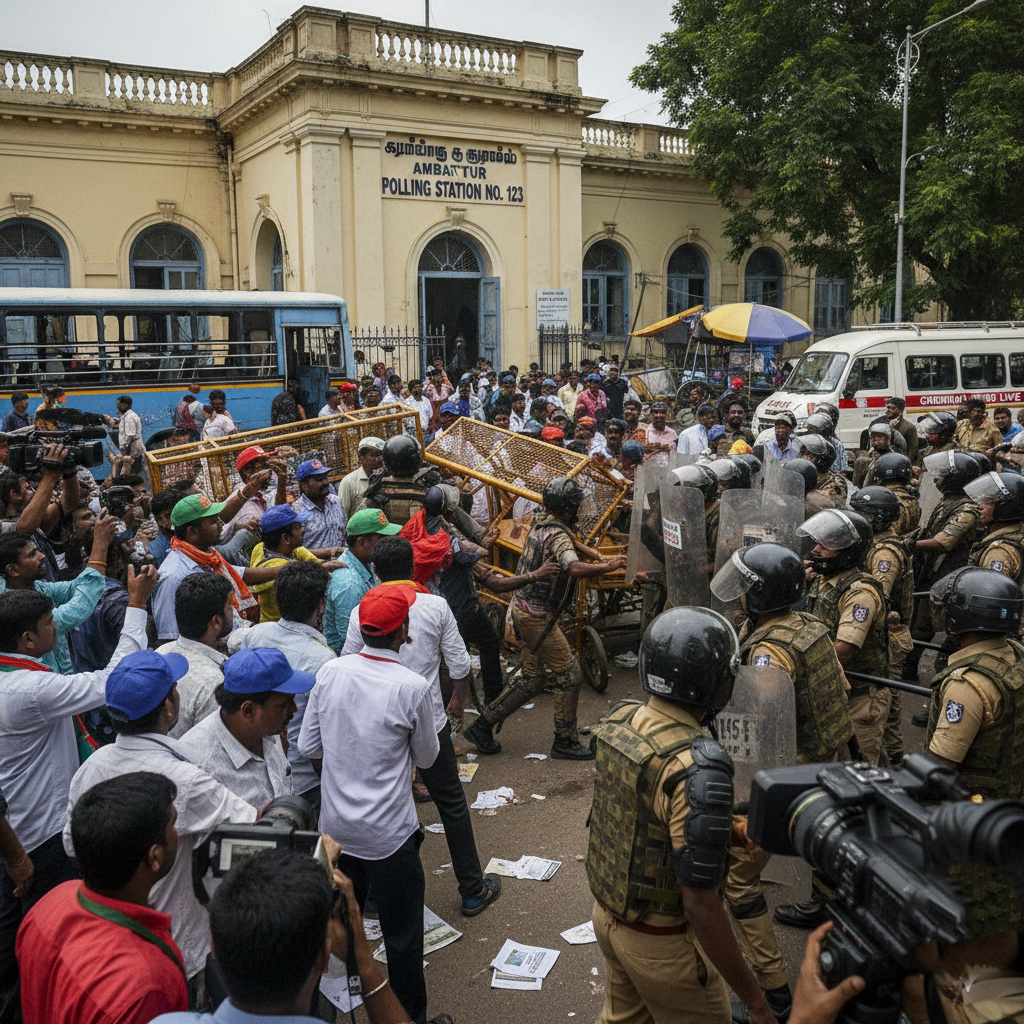
In November 2025, tensions escalated into clashes between Dravida Munnetra Kazhagam (DMK) and Bharatiya Janata Party (BJP) workers at an “SIR” (Special Intensive Revision) training session for political parties in Ambattur. The DMK has moved the Supreme Court regarding the revision exercise, wanting it postponed until after the 2026 elections. Tensions surrounding the electoral process have intensified as political parties, election officials, and civil society groups raise concerns over the conduct and fairness of upcoming polls. The heightened atmosphere comes amid allegations of procedural lapses, aggressive campaigning, and disputes over voter list accuracy. Opposition parties have accused authorities of bias in enforcing the Model Code of Conduct, claiming uneven scrutiny of campaign activities. Issues such as the use of government machinery, campaign spending limits, and the timing of official announcements have become flashpoints, prompting sharp exchanges between rival parties. Election officials, however, have reiterated their commitment to conducting free and fair elections. Measures including increased deployment of security personnel, surveillance through webcasting at polling stations, and strict monitoring of campaign finance are being implemented to prevent malpractice. Special teams have also been formed to address complaints related to voter intimidation, misinformation, and booth-level irregularities.
Political Pulse

Mass Protests on Employment Scheme Changes

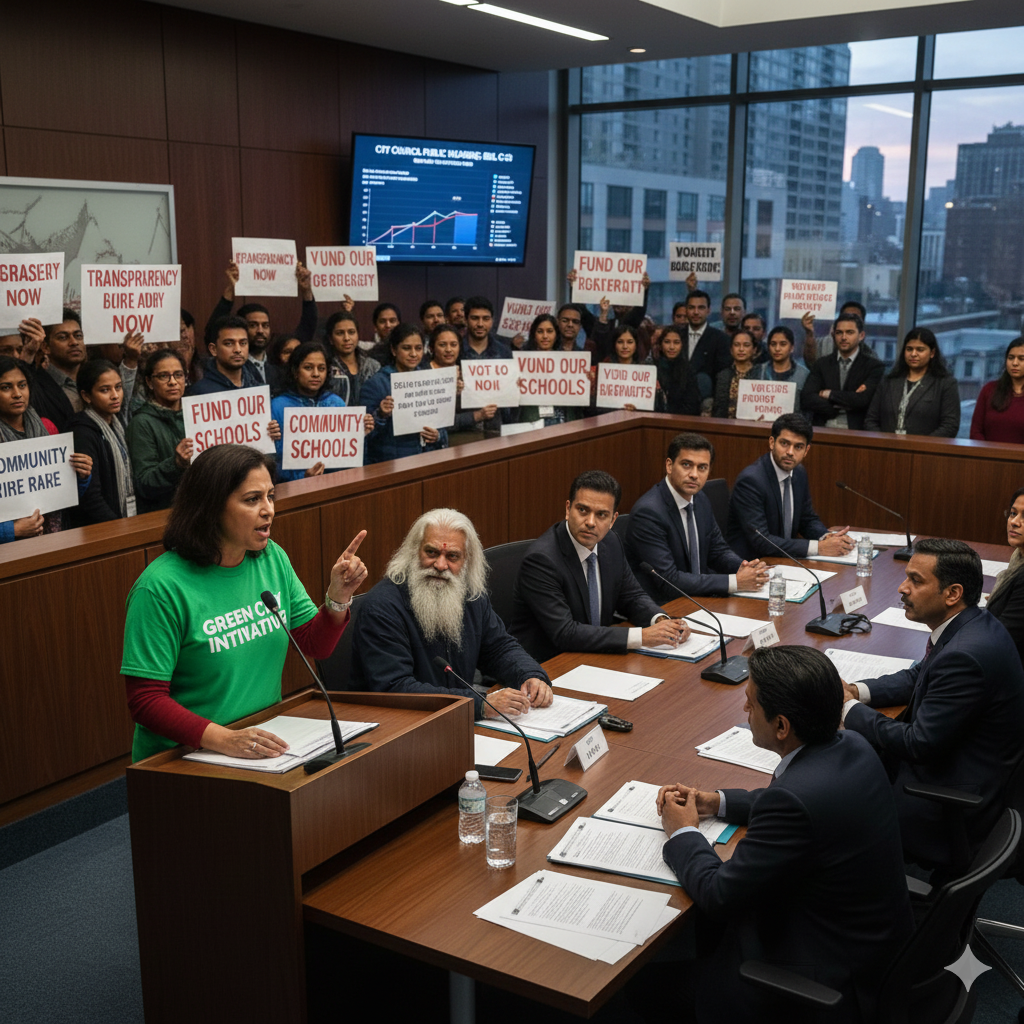
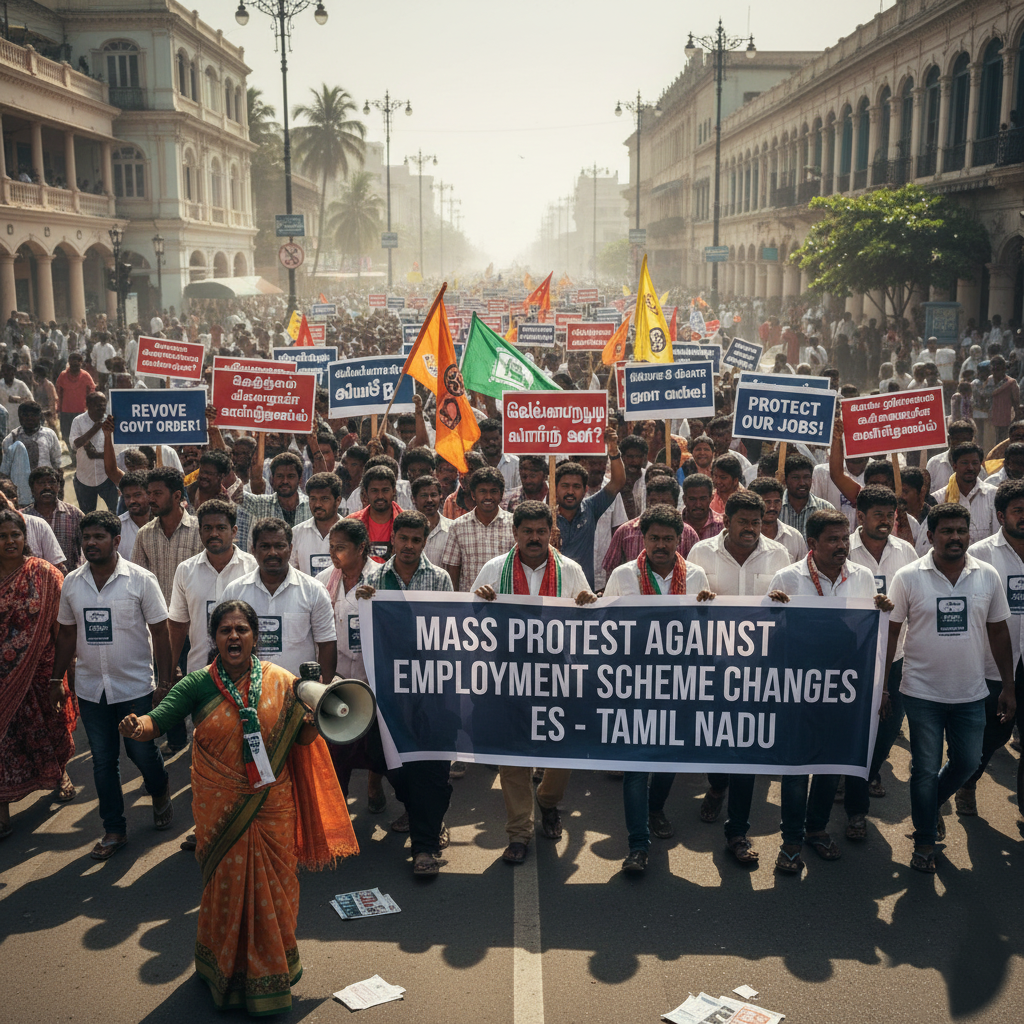
Mass protests are currently underway across India in response to the central government’s recent overhaul of the flagship rural employment scheme, which involved renaming and restructuring the Mahatma Gandhi National Rural Employment Guarantee Act (MGNREGA).  The government has introduced new legislation, the Viksit Bharat Guarantee for Rozgar and Ajeevika Mission (Gramin) (VB-G RAM G) Act, 2025, which has led to protests by opposition parties and trade unions.  Key changes in the new act compared to the original MGNREGA include the removal of Mahatma Gandhi’s name, a shift from a legal “right to work” to a mission-based scheme, and a requirement for states to cover up to 40% of costs. Critics argue these changes weaken the legal guarantee of employment and place a financial burden on states. There are also changes to work guarantee days and provisions for pausing work, which critics argue are either cosmetic or detrimental to workers. The new act also grants greater central control and digital monitoring, reducing the role of Gram Panchayats.  Protests are being led by parties like Congress and the Left, occurring in various locations across India. The legislation also faced significant opposition in Parliament. Protesters are demanding the withdrawal of the new law.  The government asserts the changes aim for improved efficiency, transparency through digital monitoring, and better alignment with infrastructure needs.

Political Pulse

Political Welfare Movements

Federation of North Chennai Residents Welfare Association (FNCRWA) Highlight: Focused on environmental issues like opposing Waste-to-Energy plants in North Chennai.Impact: Pressured local and state government to reconsider industrial projects affecting residents’ health and environment.Implementation: Organised protests, legal petitions, and awareness campaigns to influence policy decisions.Ambedkar Makkal IyakkamHighlight: Works for Dalit empowerment, education, and social justice in Tamil Nadu.Impact: Strengthened caste-based political mobilization and welfare advocacy for marginalized communities.Implementation: Conducts educational programs, rallies, and lobbying efforts to influence government welfare schemes.amil Nadu Construction Workers Central Association.Tamil Nadu Construction Workers Central AssociationHighlight: Represents construction laborers and protests against unfavorable labour policies.Impact: Influences state labor legislation and ensures worker welfare boards are protected.Implementation: Organises strikes, protests, and negotiations with government bodies to implement fair labor codes.

Political Pulse

Workers & Welfare Associations Protest

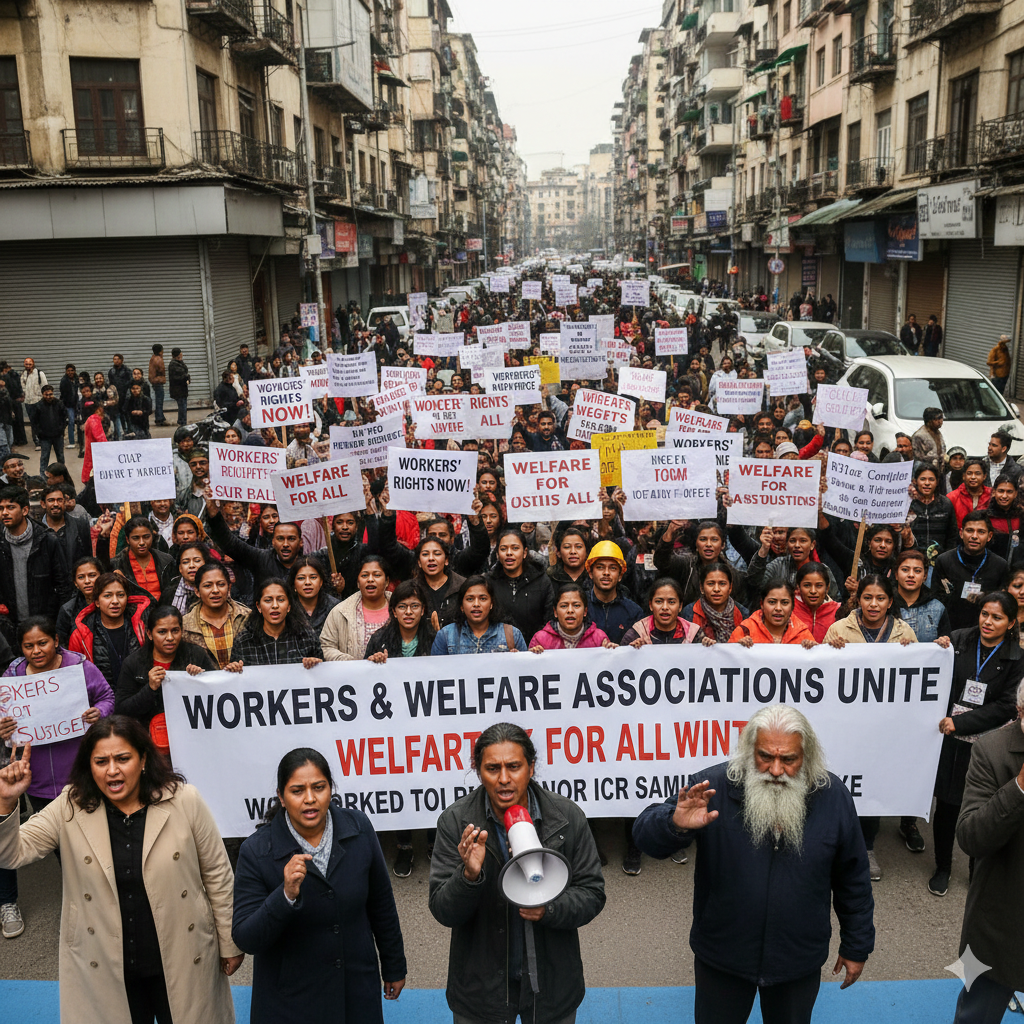
Key Highlights Workers’ unions in Tamil Nadu protested against the new central labour codes.The protests were primarily led by the Tamil Nadu Construction Workers Central Association in Madurai.Workers demanded safeguarding existing labour welfare benefits and protections. Description Labour unions argue the new codes could dilute worker rights and social security schemes.Welfare associations actively mobilized members to participate in peaceful demonstrations.The protests spotlight the union-government dialogue on labour policy reforms. Implimentations Potential revisions to labour codes due to public pressure and protests.Strengthened influence of worker welfare associations in shaping political and policy decisions.Increased awareness among workers about rights, benefits, and policy changes.

Political Pulse

Stalin Slams BJP on Religious Politics

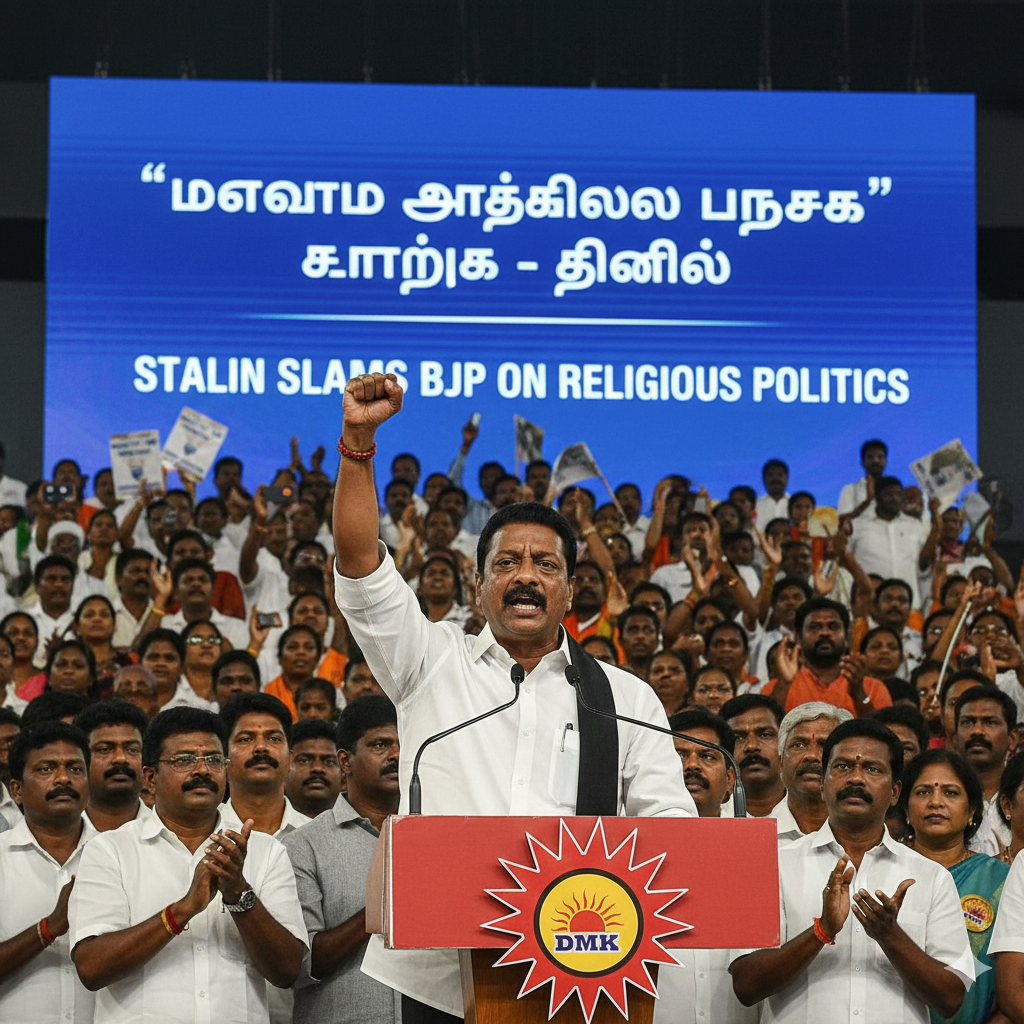
Key Highlights Accusation of Religious Division Description of the Incident Stalin’s comments came during public addresses around late December 2025, including a speech in Kallakurichi, where he was inaugurating government projects and linking development to social harmony. He explicitly accused the BJP of promoting “religious politics” to break social unity, but asserted that Tamil Nadu’s people remain united across faiths — an approach he calls the Dravidian model of governance. He used examples of mixed participation in festivals across religions to stress that inter‑faith respect and secularism are core to Tamil Nadu’s social fabric. Stalin also challenged political rivals to match his government’s social and economic achievements, asserting this contrast ahead of the next state elections. Political and Social Implications DMK reinforces secular and inclusive image to consolidate minority and progressive voters ahead of elections. Increases political polarization, making religion a key electoral narrative in Tamil Nadu. Challenges BJP’s national agenda, framing it as divisive compared to Tamil Nadu’s communal harmony model.

siw-gdgz-bnq